A parking lot does not always need the same treatment in every damaged area.
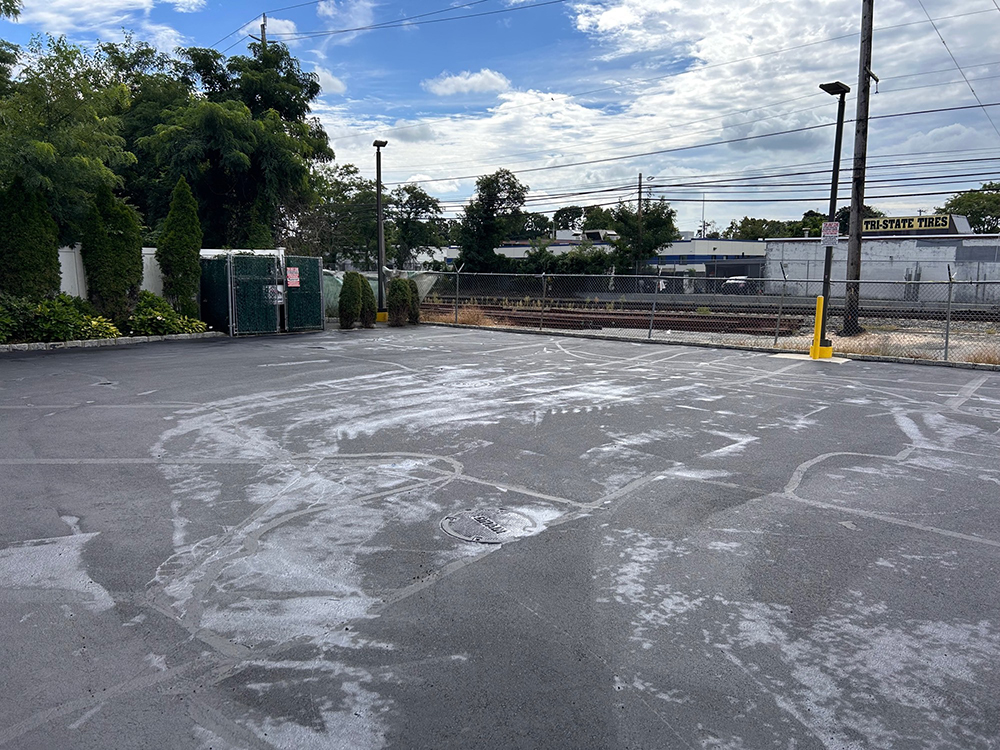
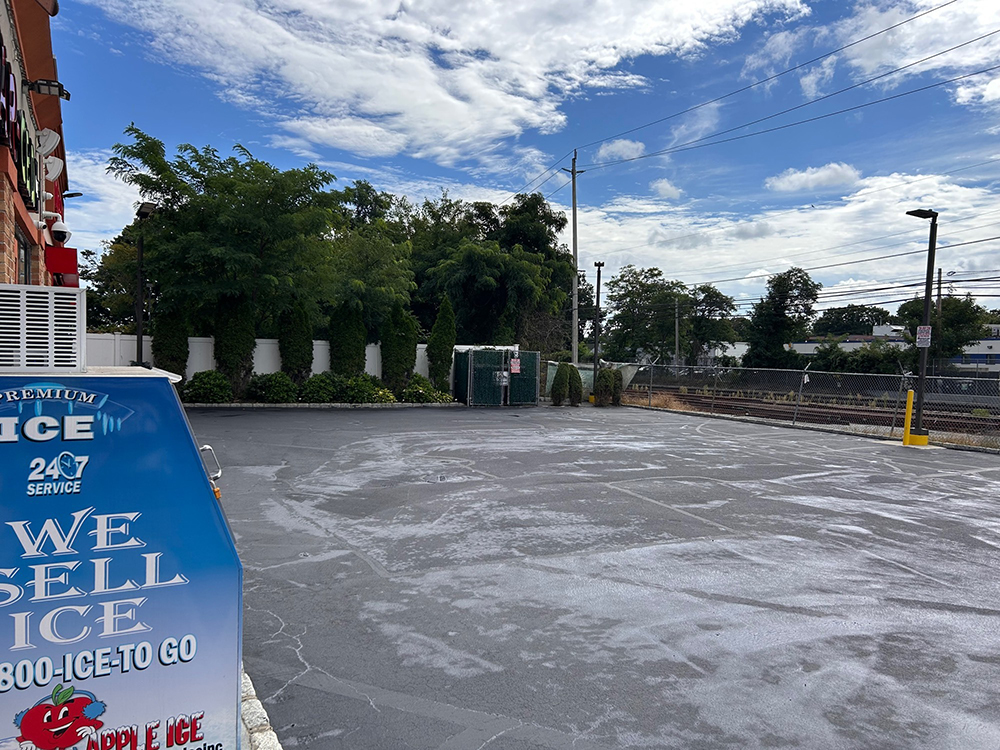
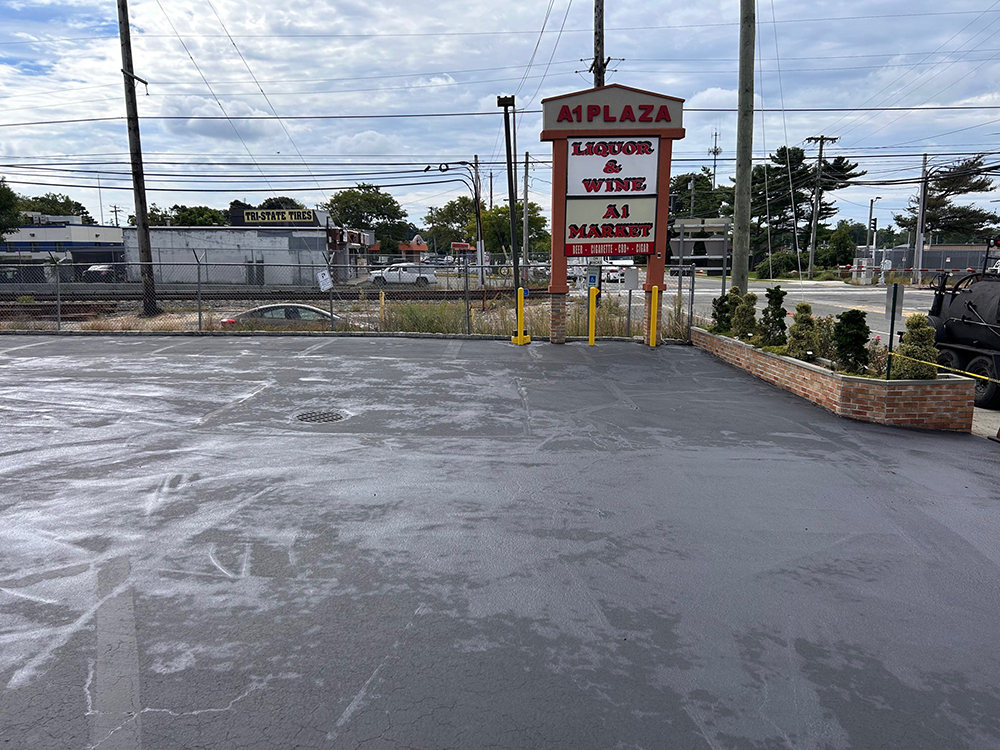
At a strip retail center on Islip Avenue in Central Islip, Suffolk County, Royal Pavement Solutions replaced asphalt in three sections while sealing suitable cracks elsewhere.
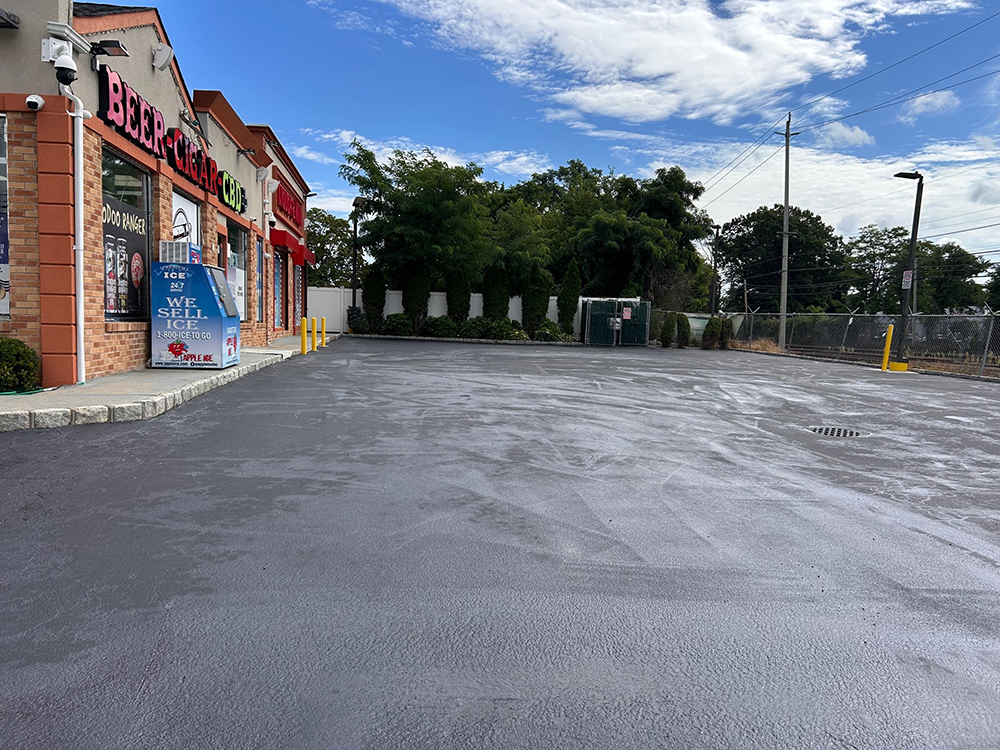
Our five-person crew was on site on August 31, 2026, for a project that also included sealcoating and parking stall restriping. The customer lot runs along the storefronts toward a fenced perimeter, with several distinct areas to maintain.
Cutting Out Three Damaged Sections
We removed and replaced 550 square feet of asphalt across three separate areas. The asphalt repair work included 140 linear feet of sawcutting and removal of five tons of failed material, which we hauled away.
We placed eight tons of Type 6 top-course asphalt, compacted the replacement to two inches thick, and finished the repaired sections flush with the surrounding pavement.
That kind of replacement addresses a different condition from an isolated crack that can be sealed. Interconnected cracks that form an alligator-like pattern can signal more extensive pavement distress.
The Federal Highway Administration’s pavement distress manual describes this pattern as fatigue cracking, which warrants evaluation rather than an assumption that sealing individual cracks will solve the problem.
Our crack-sealing scope specifically excluded fatigue cracking. For the three replacement areas, we cut out failed material and installed new asphalt instead of relying on a surface treatment.
Sealing Cracks Elsewhere in the Lot
In other parts of the parking area, we cleaned and sealed 450 linear feet of cracks with hot-applied liquid rubber. The work order specified preparation with hot air or a crack router.
Those methods do different things: hot air can help clear and dry the opening, while routing cuts or reshapes the crack to receive sealant.
Crack sealing can help limit moisture entering through the asphalt, but it does not restore pavement strength. Our work order warned that cracks wider than about one inch might not be fully sealable. That was a limitation of this scope, not a universal cutoff for every repair method.
Taken together, the two treatments let us address localized replacement areas separately from cracks suitable for maintenance.
Sealcoating Could Not Take the Place of Leveling
The surface-maintenance portion covered 5,560 square feet with one heavy coat of hand-applied sealcoat. We quoted 93 gallons, and the field log recorded 93 gallons used.
Sealing can help maintain an aging asphalt surface, but it does not rebuild failed pavement or reshape a low spot.
Our work order included an additional ton of hot asphalt for leveling low areas. That allowance mattered because a fresh coating follows the contours of the pavement beneath it. If the surface dips, water may still collect there.
Drainage inlets are visible within this lot, but water also needs the right surface grade to reach them. The work order referenced approximately a 2% drainage slope, or about one-quarter inch of fall per foot.
Repainting the Stalls and Planning for Cure Time
The parking stalls were re-striped to their existing layout by a subcontractor, using DOT-approved traffic paint applied with an airless sprayer. The existing parking layout was retained rather than redesigned.
The work order specified approximately 24 hours of cure time after completion, with additional time possible in cool or humid weather. That curing allowance matters when planning when vehicles can return to a retail parking lot.
Get the Right Treatment for Your Commercial Parking Lot
Some damaged sections need asphalt replacement, while other cracks may be good candidates for sealing. If your commercial parking lot has broken pavement, open cracks, or areas that hold water, contact our team to request an estimate for asphalt repair and pavement maintenance.