Controlling where the water goes prevents erosion from washing out the foundational structures beneath your pavement or pooling on the surface.
Where Does The Water Go?
Water is the main thing that breaks asphalt down, and drains are where it collects on purpose. A catch basin, curb inlet or drywell sits at the low point of its part of the lot. Every storm sends water to it, and traffic rolls over it all day.
When a drain sits too high, too low or loose in its frame, water stops going in cleanly. It pools at the edge, seeps into the pavement and the stone base beneath it, and the surface around the drain can start to sink. Left long enough, that seepage can wash out the soil under the lot.
What to look for around your drains:
- Water still standing near a drain hours after the rain stops
- A ring of cracked or sunken asphalt around the grate
- A grate or cover that rocks, rattles, or sits above or below the pavement
- Sediment and debris filling the basin
- A dip or an opening in the pavement near a drain or pipe
If you see the last one, keep traffic off it and give us a call.
Custom Drainage Solutions Built For Your Property
Catch basin and curb inlet repair
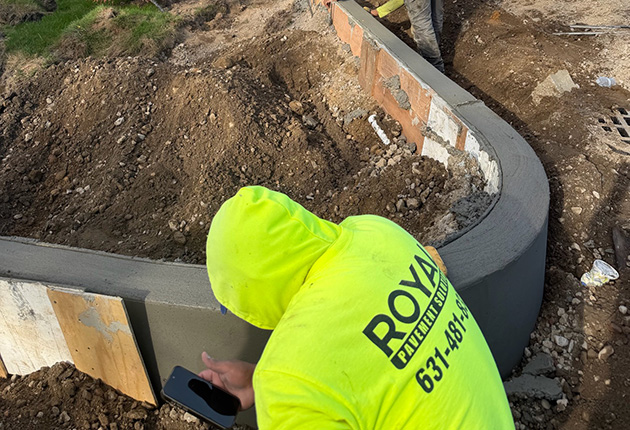
Catch basin trouble often starts at the top of the structure, in the collar of brick or block that holds the frame at the right height. When the collar cracks, the frame can shift, and the pavement around it follows. We rebuild collars with new brick, block, and/or mortar, which the trade calls “re-blocking,” and replace broken frames, covers, and other drain hardware.
Drains set to match a new surface
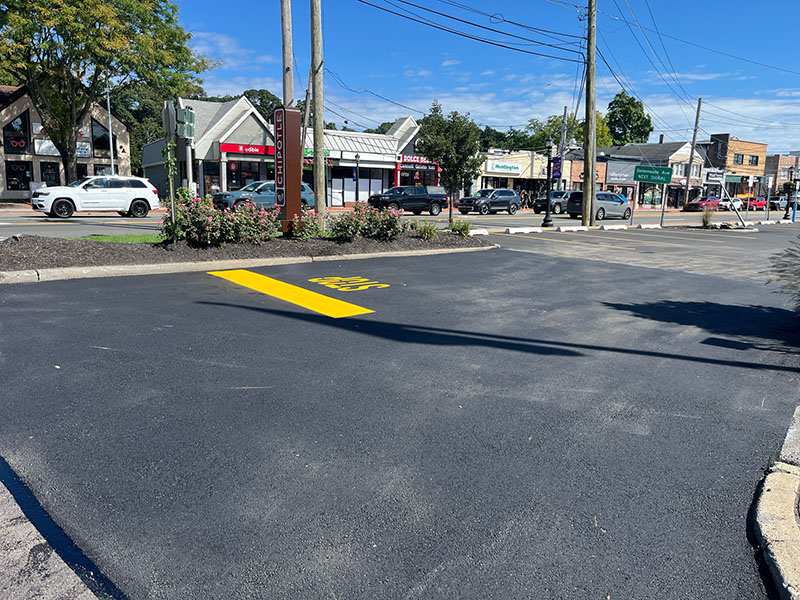
Depending on the scope, a new layer of asphalt raises the lot, often by an inch and a half or more. Every drain has to be evaluated and adjusted for, or it ends up sitting in a pocket that holds water. We raise catch basins, curb inlets, and manholes to the height of the new surface as part of the paving job, so nothing sits low enough to hold a puddle or high enough to catch a tire or a plow.
New drainage installations
For expansions, new construction, and problem areas, we install new catch basins, connect drain pipe, and build precast drywells: buried concrete chambers that hold stormwater and let it soak back into the ground in a controlled manner.
Sinkhole investigation and repair
A sinkhole near a drain usually means something underneath has failed, often a cracked structure or pipe that is letting soil wash away. The hole you can see can be much smaller than the empty space beneath it. That’s why a sinkhole job often starts as an investigation: we open the area, find the cause, and then tell you what the repair involves. If the fix can’t happen right away, we make the area safe in the meantime.
Trench drain repair and replacement
Trench drains are the long, grated channels that cross entrances, loading areas and drive lanes. We repair them, replace them, or remove them when they’re no longer needed, and restore the asphalt around them.
Drain, catch basin and drywell cleaning
Catch basins and drywells fill with sediment over time, and a full one can’t take water. We vacuum them out so they drain the way they were built to.
Why Choose Royal Pavement Solutions For Your Drainage Needs?
As a leading paving contractor in Islip, Royal Pavement Solutions is known for a commitment to quality. We use the highest quality materials and equipment to ensure every asphalt paving project meets the highest standards.
Our team is fully equipped to handle projects of all sizes, and we take pride in our ability to deliver top-notch results that stand the test of time. We are committed to providing the best possible service for your project.
For expert paving on your next new construction installation project, contact us today!