Curb Installation for Long Island HOAs and Multi-Family Communities
HOA boards and multi-family property managers have a lot riding on their curbs. Curbs guide traffic, hold the edge of the pavement, protect landscaping, and steer stormwater to the drains. Royal Pavement Solutions installs new concrete curbing for homeowner associations, apartment complexes, condo communities, and other multi-family properties across Long Island, NY.
We form and pour curbs along private community roads, around parking areas and islands, and on the public street in front of your property. Because we also handle the asphalt, your curb and paving work can be planned as one project on one schedule.
What Concrete Curbing Is
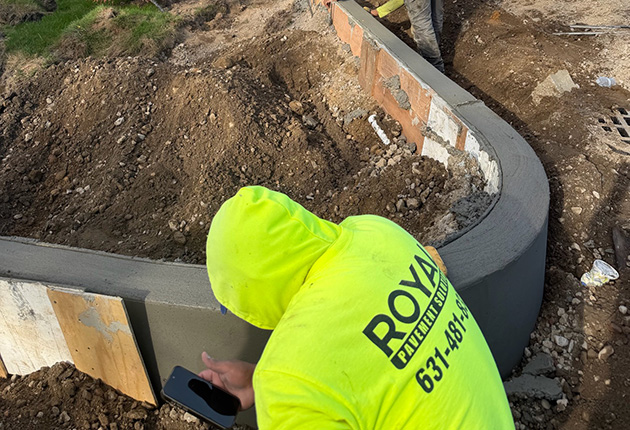
Concrete curbing is the raised concrete edge along a road, parking lot, or planting bed. On most commercial jobs it’s cast in place, which means we set forms on site and pour the curb right where it will stay. A well-built curb holds the asphalt in place, keeps vehicles off lawns and walks, and gives water a clear path to the catch basins.
Typical Technical Specs
Your engineer’s plan or the municipality’s standard detail always has the final word. These are the specs commonly used on Long Island commercial curb work:
- Concrete – 4,000 psi, air-entrained concrete that stands up to freeze-thaw cycles and road salt
- Profile – A standard vertical curb is commonly about 6 inches wide at the top and about 18 inches deep, with roughly 6 inches showing above the pavement; mountable and curb-and-gutter profiles vary
- Base – Compacted aggregate under the curb so it doesn’t settle or tip over time
- Joints – Contraction joints about every 10 feet, plus expansion joints at set intervals and wherever the curb meets a structure, sidewalk, or drainage inlet
- Line and grade – Set to a steady slope so water runs to the inlets instead of ponding along the curb
- Finish – Smooth face with tooled, rounded edges that resist chipping from plows and tires
Permits and Local Rules on Long Island
- Private community roads and lots – Curbs on privately owned HOA roads and complex parking areas usually don’t need a right-of-way permit. If the work is part of a site plan or larger site alteration, your local building or planning department may review it.
- Public street frontage – Curb along a town or village road needs that municipality’s right-of-way or road opening permit. Towns commonly require liability insurance naming the town, a bond, permit fees, and work built to their standard curb detail.
- County and state roads – Work along county roads goes through the Nassau or Suffolk County Department of Public Works. State roads need an NYSDOT Highway Work Permit.
- Curb cuts – New or widened entrance openings on a public road must be approved by the agency that owns the road.
- Fire access – New curb lines can’t narrow fire apparatus access roads. The Fire Code of New York State generally calls for at least 20 feet of unobstructed width.
- Accessible routes – Wherever an accessible walkway crosses a curb, a code-compliant curb ramp is required.
- Utility markouts – New York 811 must be notified at least two full working days, and no more than ten, before excavation begins.
Types of Concrete Curbing We Install
- Vertical curb – A straight, upright face that keeps vehicles off lawns, walks, and planted areas
- Mountable curb – A sloped face vehicles can roll over, often used along community roads where cars occasionally need to cross
- Curb and gutter – A curb with an attached concrete gutter that carries water to the drains
- Parking islands and medians – Curbed islands that organize traffic and protect light poles and landscaping
- Landscape edge curbing – Borders that keep pavement edges from breaking down into planting beds
- Curb replacement – Removal and replacement of cracked, sunken, or plow-damaged sections, ideally ahead of a repaving project
Our Curb Installation Process
- Site walk – We walk the property with your board or manager, measure the curb runs, and check how water drains
- Phasing plan – We work with you on a section-by-section plan so residents keep as much parking and access as possible
- Permits and markouts – We confirm what approvals apply and request a New York 811 markout before digging
- Excavation and base – Old curb and soil come out, and we compact a firm aggregate base
- Forms to line and grade – Forms are set and checked so the finished curb drains the way it should
- Pour and finish – Concrete is placed, consolidated, finished, and jointed
- Cure, backfill, and pave – The curb cures before backfilling and before asphalt is placed against it
Benefits for Long Island HOAs and Multi-Family Properties
- Stronger pavement edges – Asphalt tends to fail first at unsupported edges, and a solid curb holds it in place
- Better drainage – Curbs channel water to catch basins, reducing puddles and winter ice in walkways and parking areas
- Protected landscaping – Vehicles stay off lawns and planting beds, which cuts down on turf and irrigation repairs
- Organized traffic and parking – Islands and curb lines show residents and visitors exactly where to drive and park
- Built for our winters – Air-entrained concrete and proper joints resist freeze-thaw cracking and salt damage
- Fewer disruptions for residents – Doing curb and paving work as one coordinated project means one round of construction instead of two
- A sharper look for prospects – Clean, straight curb lines make a strong first impression on prospective tenants and buyers
Why Choose Royal Pavement Solutions for Curbing
- Relationships that last – Some of our customers have worked with us for three generations
- Experience with multi-family sites – Our crews already pave, mill, seal, and stripe for apartment complexes and multi-family rental properties
- Paving runs in the family – Founder Kenny Roy III grew up in his family’s asphalt business and opened Royal in 2019
- Modern equipment – Every machine in our fleet is a 2023 model or newer
- Easy to reach – Board members and managers always get a live person, and any missed call is returned within the hour, guaranteed
- Straight talk on price – We believe in fair pricing and honest work on every bid
Concrete Curbing FAQs
Do we need a permit to install curbs on our private community roads?
Usually not a right-of-way permit, since the roads are privately owned. Larger site changes may still need building or planning department review. Any curb along a public street does need a permit from the town, village, county, or state.
Should we replace curbs before or after repaving?
Before. New curb is poured and cured first, then the asphalt is placed against it at the right height. Doing it in the other order often means cutting into brand-new pavement.
Our curbs look shorter than they used to. Why?
Each asphalt overlay raises the pavement and shrinks the exposed curb face. Once the reveal gets too short, water can spill over and cars can mount the curb. Milling the old asphalt before repaving or replacing the curb restores the proper height.
Should our community use vertical or mountable curbs?
Vertical curbs work best where you want to keep vehicles out, such as lawns, walks, and islands. Mountable curbs suit spots where cars sometimes need to cross. Many communities use both, and we’ll recommend the right mix for your layout.
Will residents lose parking during the work?
Each section is closed while the curb is formed, poured, and cured. We’ll work out a phasing plan and schedule with you ahead of time so you can give residents notice.
Related Services
Pair your curb project with these services:
- Concrete Paving – Loading docks, dumpster pads, and other concrete work for busy properties
- Sidewalks & Walkways – Level, durable walks that tie into new curb lines
- ADA Ramps – Code-compliant curb ramps wherever a walkway meets the curb
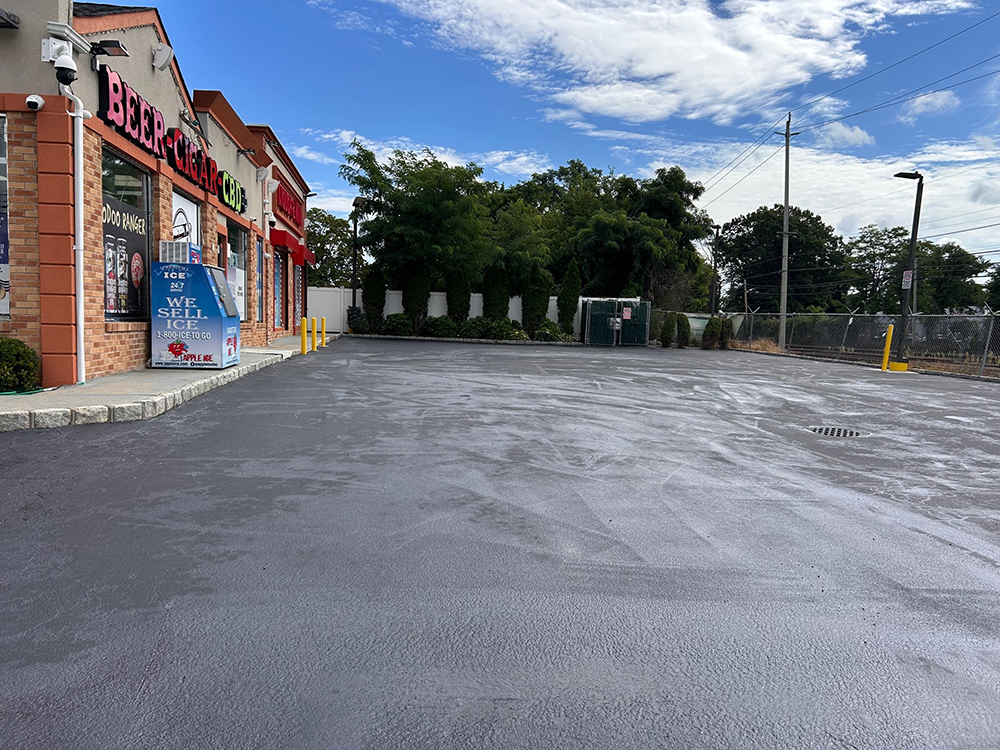
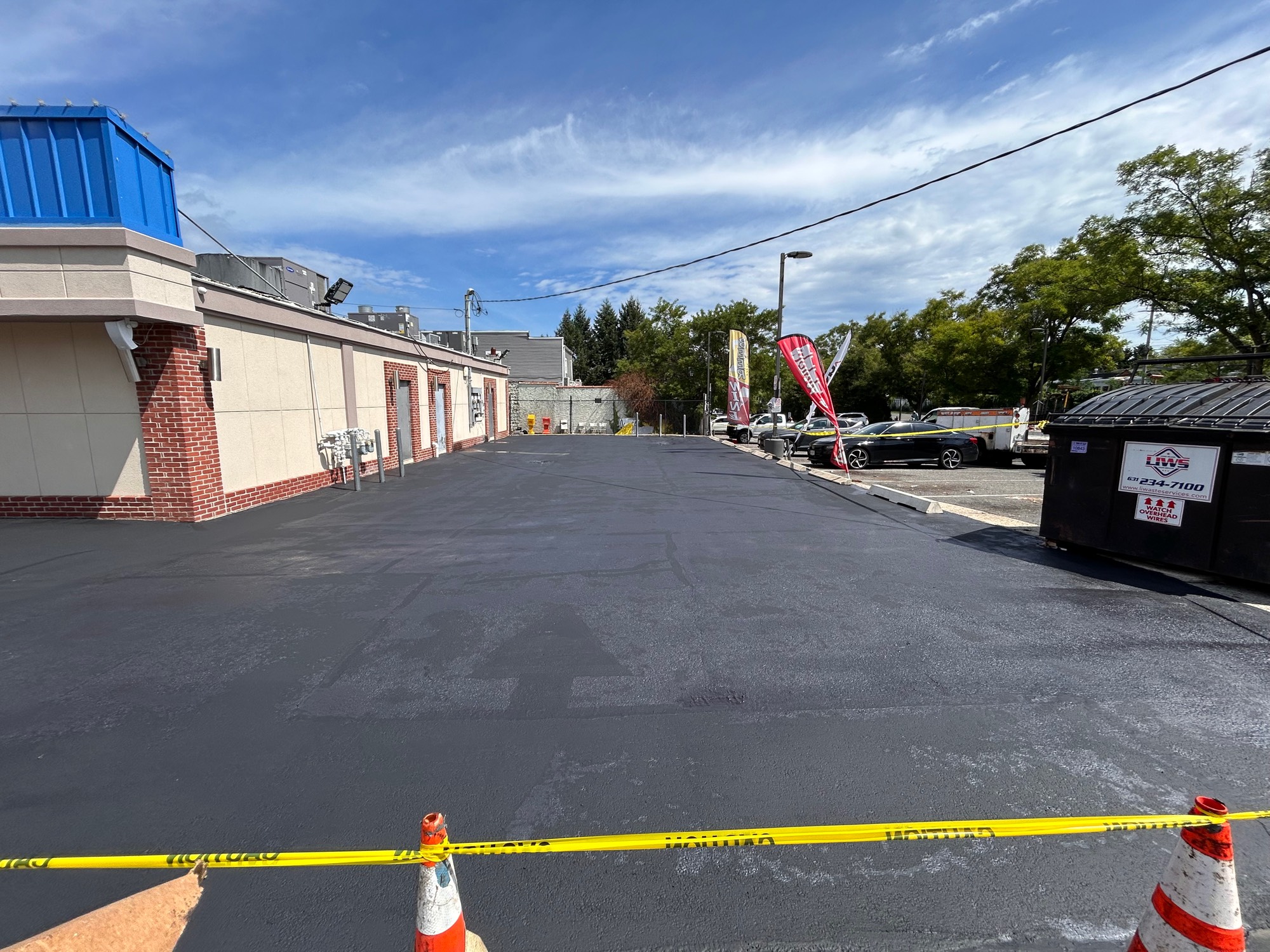
- Parking Lot Paving – Fresh asphalt placed right up to your new curbs
- Catch Basin – Drainage structures that receive the water your curbs direct
Plan Your Curb Project
Budgeting for next season or getting ready to repave? Call Royal Pavement Solutions at 631.481.8326 to ask about our free virtual assessment, or email info@royalpavementsolutions.com. We install concrete curbing for HOAs and multi-family properties throughout Nassau and Suffolk Counties, Monday through Friday, 8am–5pm.