CUSTOMER STORY · APARTMENT COMMUNITIES · CORAM, NY
When Patching Stops Keeping Up
How a Long Island property manager got her 450-apartment community onto a three-year repaving plan, worked within her budget, and made the owner and residents happy.
Brandon Noel·Oct. 28, 2026
AT A GLANCE
THE COMMUNITY
A garden-style rental community in Coram, Suffolk County, first built as a golf course community. 450 apartments on 52 acres; more than 900 residents.
THE CUSTOMER
Jacquie, the property manager. A management company runs the community for its owner.
THE PROBLEM
Pavement that hadn’t been repaved as a whole in 20 years, kept going with patches.
THE PLAN
One contract covering 2026 to 2028. Worst areas first, one complete section at a time. About 500,000 square feet in all.
THE SCOPE
About 166,000 square feet repaved, deeper repairs in the worst spots, 30 spot repairs elsewhere, 10 storm drains rebuilt, a new speed bump and new striping.
The property owner’s visit finally fell on a nice day.
“We joke that usually it’s raining when he comes,” said Jacquie, the property manager at a 450-apartment rental community in Coram, Long Island. With the weather on their side, she and her team walked him through the parking lots.
The goal was simple: small scale, bandaid patches were no longer keeping up with the overall condition of the parking lot, and Jacquie knew it was long past time to redo it.
In her words, “We were like, ‘You see that? You see this? You see that? You see this?’ We made him walk everywhere and pointed out the Swiss cheese potholes along the way.” And she believes that walk made all the difference. But there was just one problem: Jacquie knew her annual budget still couldn’t accomplish all that needed done, even with the owner’s approval.
Additionally, the thought of having to break up the much-needed work across multiple years, repeating the contracting process, was not appealing. The solution for Jacquie came in the form of a unique three-year structured plan to repave a community for the first time since it was originally constructed twenty years ago. Three years of work, one contract, and fewer headaches.
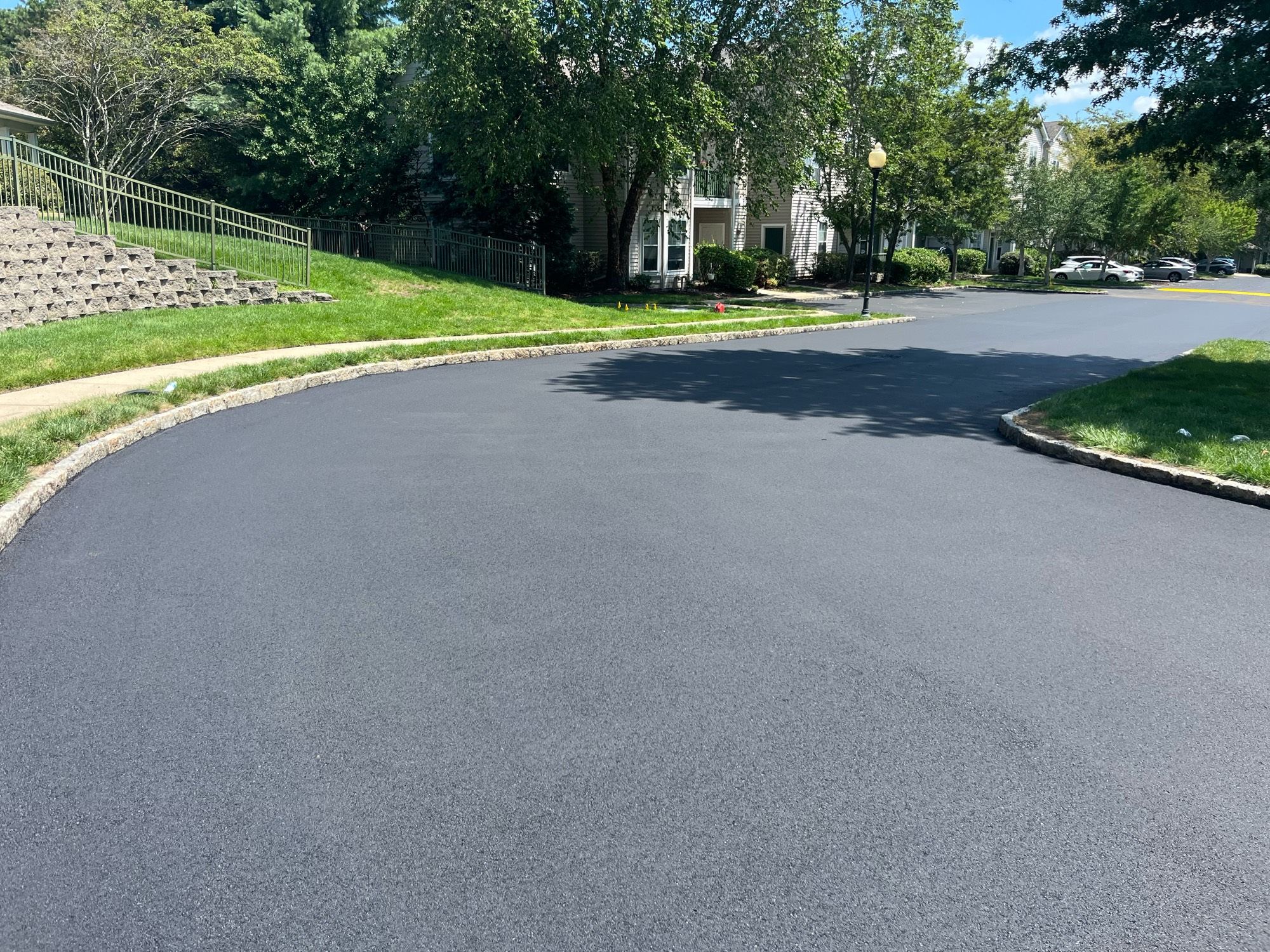
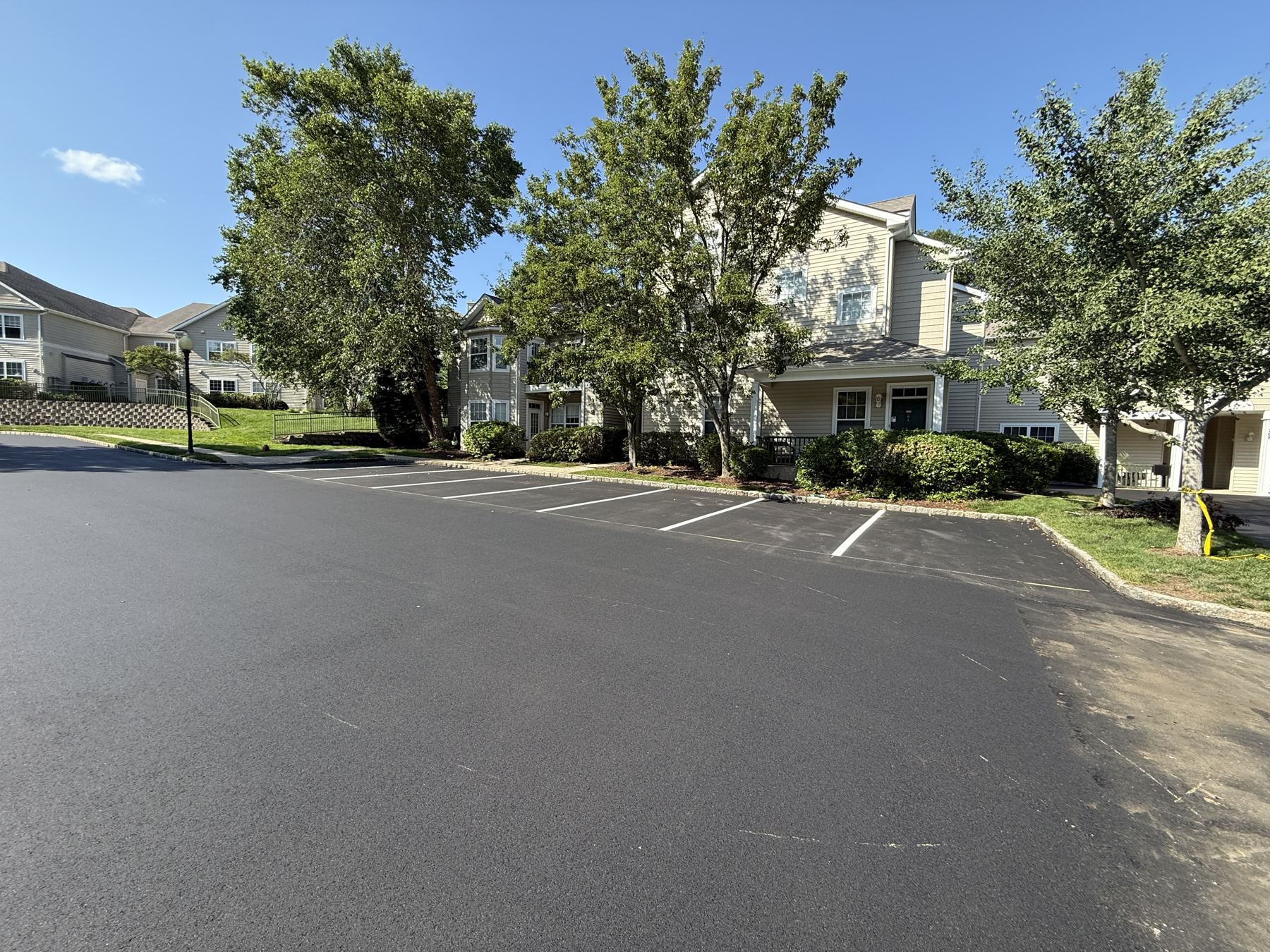
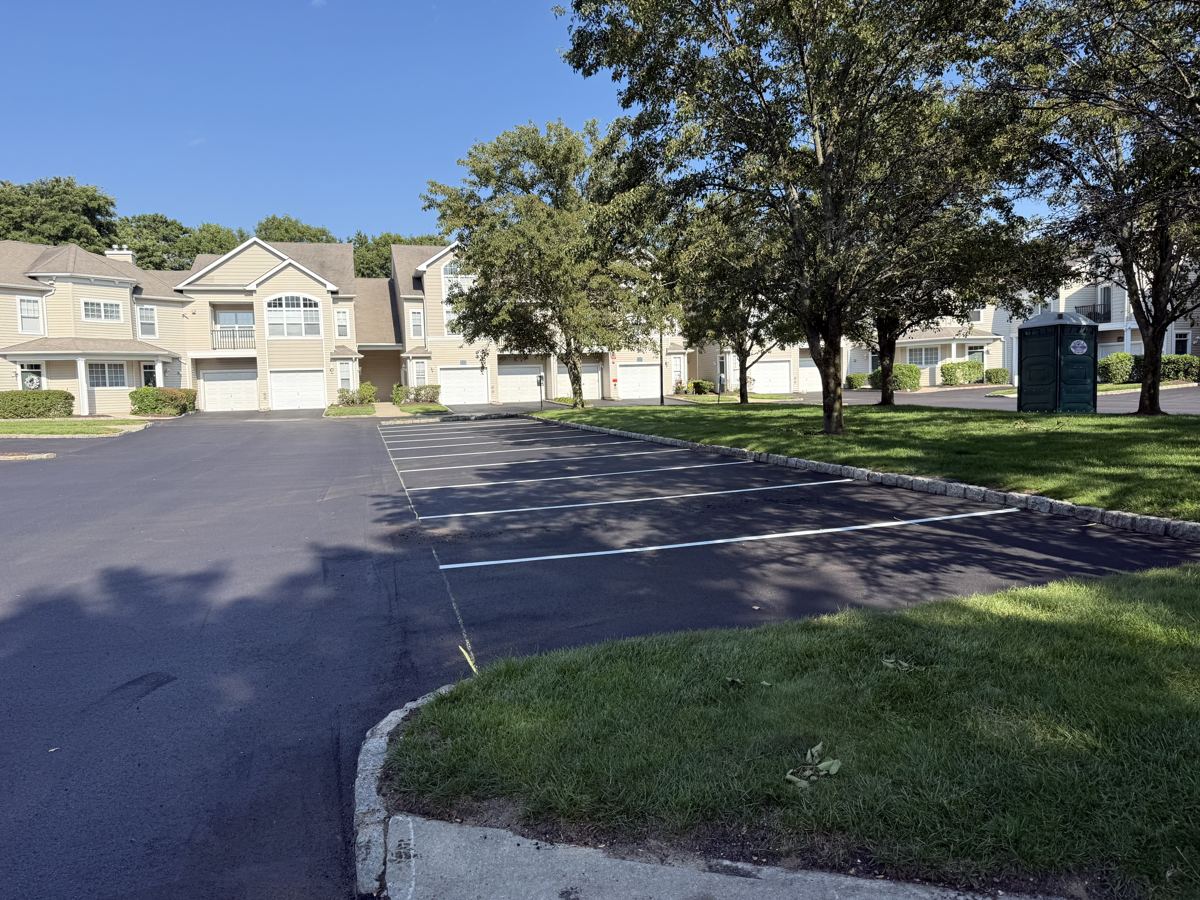
A finished year-one parking area, July 2026.
A job in the middle
Jacquie has held most of the jobs in a leasing office, from marketing to running the property. “Project managers are kind of like jack-of-all-trades,” she said. She drafts vendor contracts, collects bids, handles the billing and financial reports, and hears from residents when they have issues.
Day-to-day maintenance belongs to Don, the community’s longtime maintenance supervisor, and the two of them coordinate on the big projects.
She described site staff as sitting in “this interesting middleman position” between residents, the management company, and ownership:
“And you’re kind of in between all three of those, and you need to figure out how to balance [it all].”
JACQUIE, PROPERTY MANAGER
What all three had in common was the condition of the parking lots, and Royal Pavement Solutions (RPS) maintained them on-and-off for years. However, as time went by, the spot patching wasn’t keeping up. In 2021, when RPS came back to do more patch work, Peter Pappas, RPS vice president, felt responsible to explain why things were getting worse.
Peter Pappas, Vice President
Peter recognized that there was a bigger problem at hand, and so he offered two kinds of proposals: one for the season’s requested spot repairs, and a larger one that would address the underlying issues. Peter told Jacquie that RPS was happy to keep doing the requested patches, but that, “Other liabilities were going to keep popping up right behind them.”
For the first few years, the spot repair proposals were all that got approved, but he continued to present the more foundational, long-term repairs.
WHY A HARD WINTER IS SO HARD ON OLD PAVEMENT
1Melting snow and ice seep in through cracks
2The water freezes, expands and pushes the pavement up
3It thaws and leaves a hollow underneath
4The surface cracks and falls into it
Potholes start with water. According to the Town of Queensbury, N.Y., Highway Department, melting snow and ice seeps beneath the pavement through cracks. When it freezes, it expands and pushes the pavement up. When it thaws, it leaves a hollow underneath, and the surface cracks and falls into it.
A patch fills the hole you can see. The pavement around it is just as old and has been through the same winters, which is why, on an aging lot, new potholes keep turning up next to last year’s patches.
SIGNS YOUR PATCHING HAS STOPPED KEEPING UP
The repair bill comes back every season, but the lot as a whole isn’t getting better.
New potholes keep appearing next to last year’s patches.
One hard winter brings a repair estimate the size of several years of normal maintenance.
Residents drive “over a pothole every day,” in Jacquie’s words, and there are “patches everywhere.”
The lot hasn’t been repaved as a whole in a very long time. At Jacquie’s community, it had been 20 years.
The winter that changed the conversation
As time went on, Peter said he could count on a call from Don every spring, once winter had done its damage. Then, just before the winter of 2026, when he walked the property, his estimate just to fix the potholes came to almost three years of what the community normally spent on maintenance.
Peter remembers their reaction, “That’s like three years of maintenance right there and we’re not getting anything done.”
Don and Jacquie decided, maybe it was time. They pushed to repave the whole property instead.
Peter Pappas, Vice President
Peter said the two were aligned because they work on site. “They’re getting all the feedback from the people who live there.”
In April 2026, Peter got the call: Ownership was considering repaving the whole property. Peter updated the budget proposal from the year before. The new plan would fix their underlying pavement issues with a brand new parking lot surface. There was just one remaining problem: their annual budget.
That was when Peter, Don, and Jacquie worked together on a unique contract set-up that allowed them to stay within their annual budget, while also getting the comprehensive repairs, without having to restart the process each year. Just like projects have phases, this was a form of contractual phasing.
Peter Pappas, Vice President
Peter recalled, “Instead of doing one-year contracts, we created a custom three-year contract, giving their organization the flexibility they needed.”
Days later, the contract was signed. And she explained that while this type of plan may not work for everyone, it was worth presenting to the owner, but didn’t claim to know any secret formula to get approval.
“You kind of learn their personality and how to present things to them,” she said. “Because some owners will be like, ‘Yeah, go for it. Do it.’ And others will want a lot more data. I’ve been on both sides of the fence.”
She recounted doing the data-heavy version before, when the community redid its gym years earlier.
“I think I had a total of like 12-to-16 bids for the gym,” along with a spreadsheet pricing each type of equipment.
While the walk through the parking lot is what convinced this owner, timing was a factor as well.
“I think in general from like August to October is when most people are doing their budget for the next year. And I know most sites run on a January to December fiscal year.” Year one came together outside that cycle, in the spring after the bad winter.
TAKING A REPAVING PLAN TO OWNERSHIP: WHAT WORKED HERE
Walk the owner through the worst areas in person.
Bring choices, each with its cost, instead of a single number.
Match the pitch to the owner. Some want to see it. Some want the data.
Ask for one contract that covers every phase, so the work isn’t re-bid and re-approved each year.
Get your contractor’s numbers early. Peter had been helping the site team budget for a bigger project for years before it was approved.
Know the budget calendar. At many sites it runs from August to October, for a January-to-December year.
Getting the project started
The three-year plan was designed to focus on the worst areas first. RPS divided the property’s square footage across each phase including the driveways, shared parking areas, and shared roads inside them.
Peter Pappas, Vice President
“We only did complete sections at a time,” Peter said. “That way we weren’t doing half areas.”
Contract phasing isn’t the answer for every property. For instance, the same owner at a different location chose to repave that property all at once, which Jacquie referred to as, “A different style of property in a different market.”
2026, year one
2027
2028
Illustration only, not the community’s actual layout.
Year one · July 2026
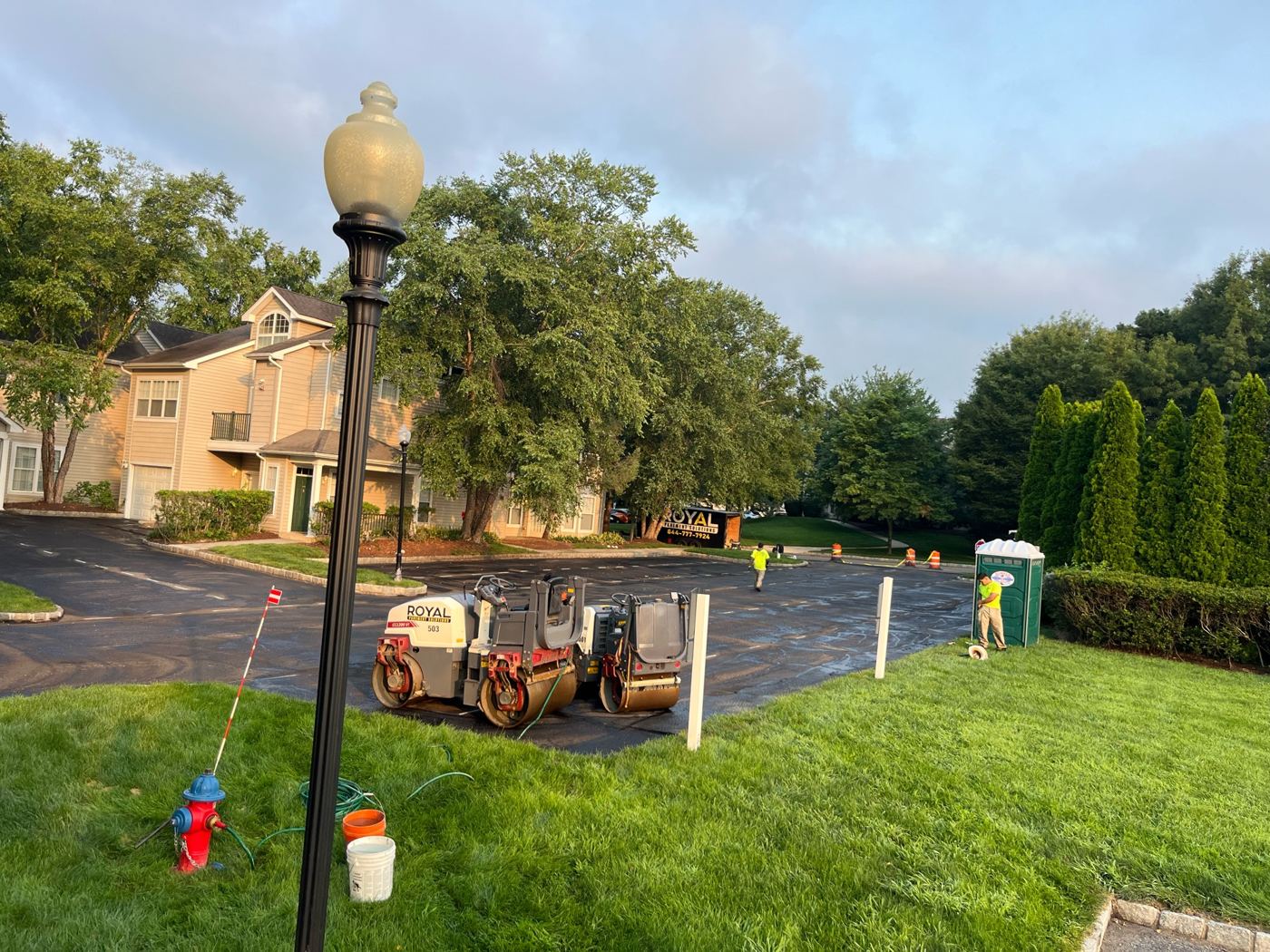
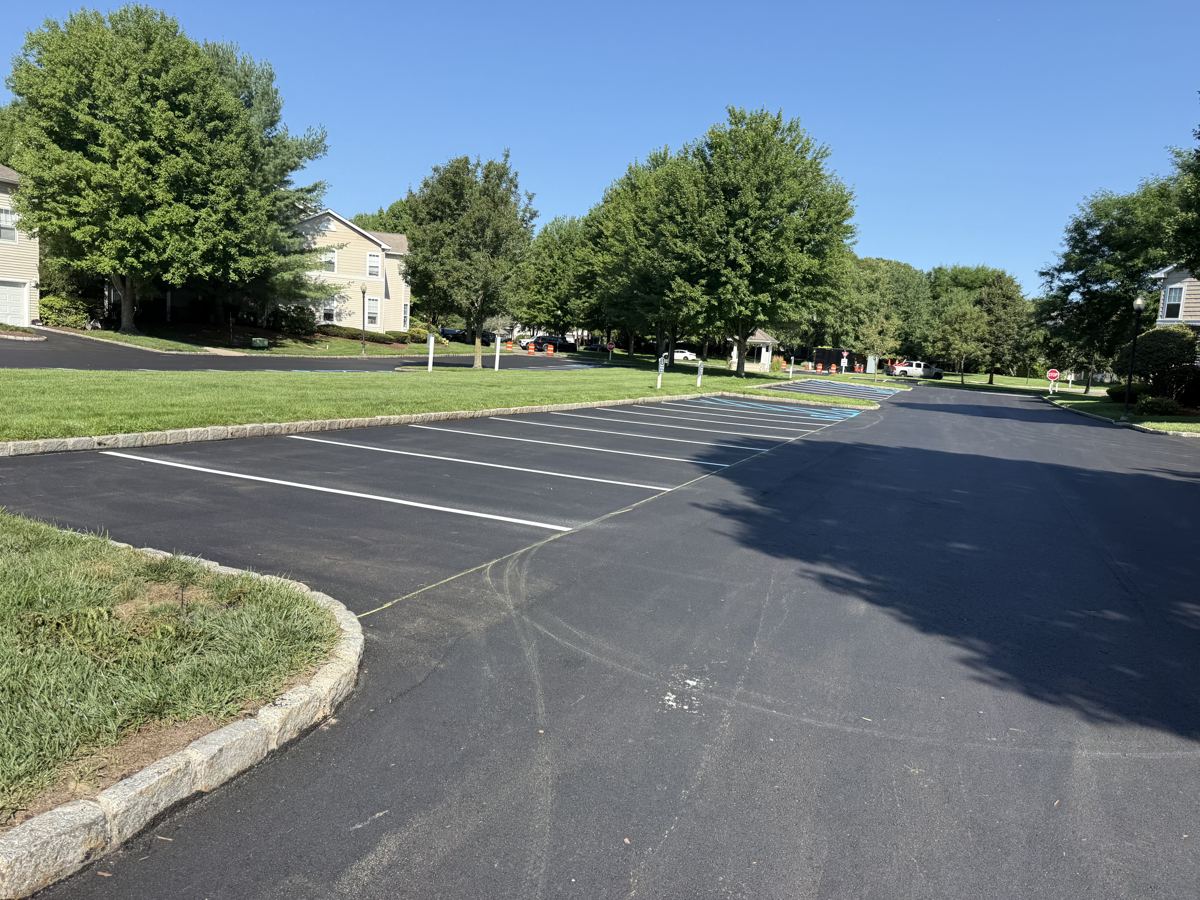
Rollers on a newly paved lot, July 2026.
Repaving about 166,000 square feet. A milling machine ground off the top 2 inches of worn asphalt, and the old material was hauled away. The surface was swept and sprayed with a tack coat, a sticky layer that helps new asphalt bond to what’s underneath. Then 2 inches of new hot asphalt went down and was rolled.
Deeper repairs where the pavement had failed. In the worst spots, up to 5,000 square feet, crews removed another 2½ inches from the layer below the surface and rebuilt it.
30 spot repairs outside this year’s section, about 3,000 square feet in all.
Drains. The block-and-mortar collars at the top of 10 storm drains were rebuilt, and a catch basin hood and a 24-inch drain cover were replaced.
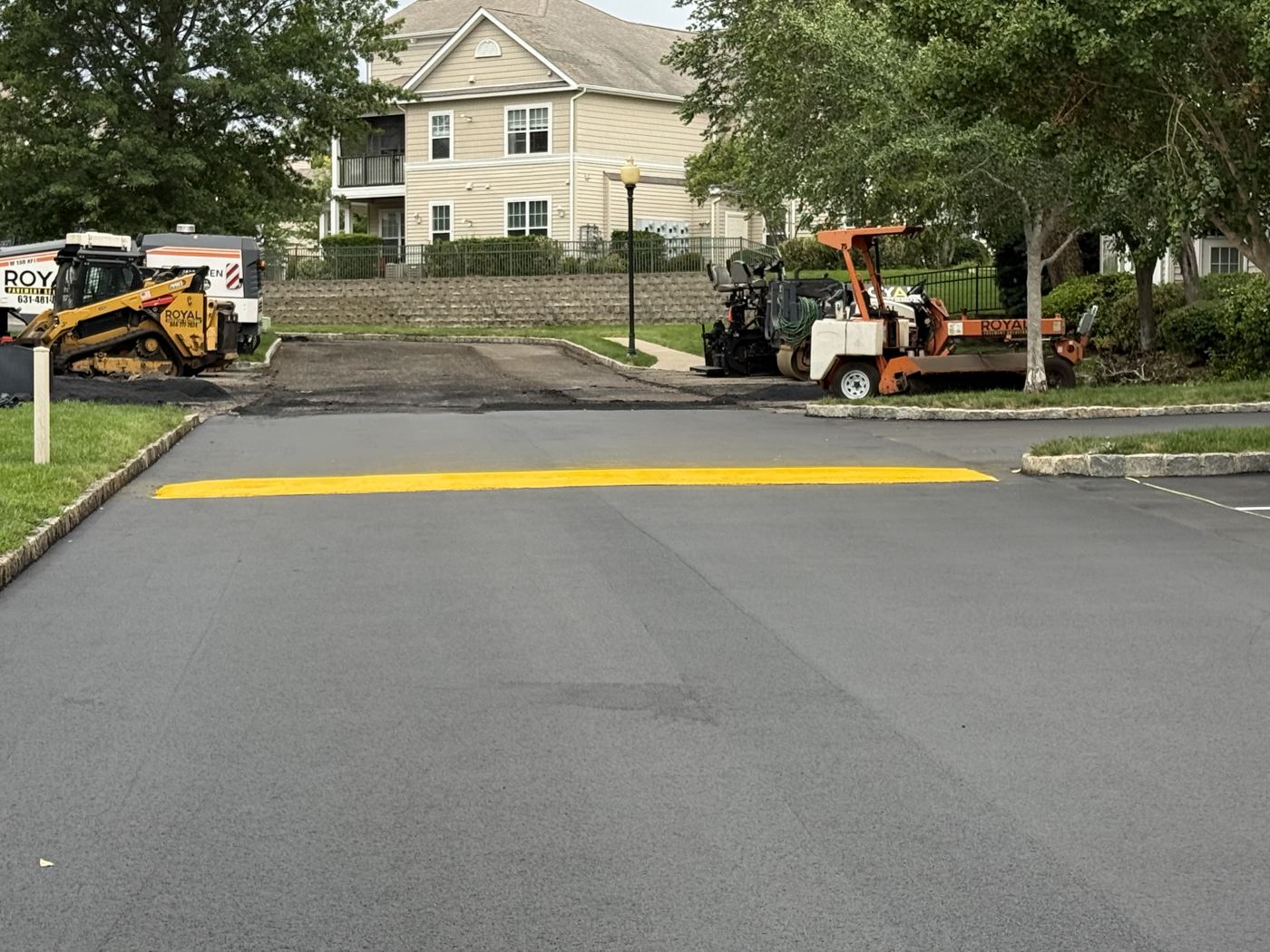
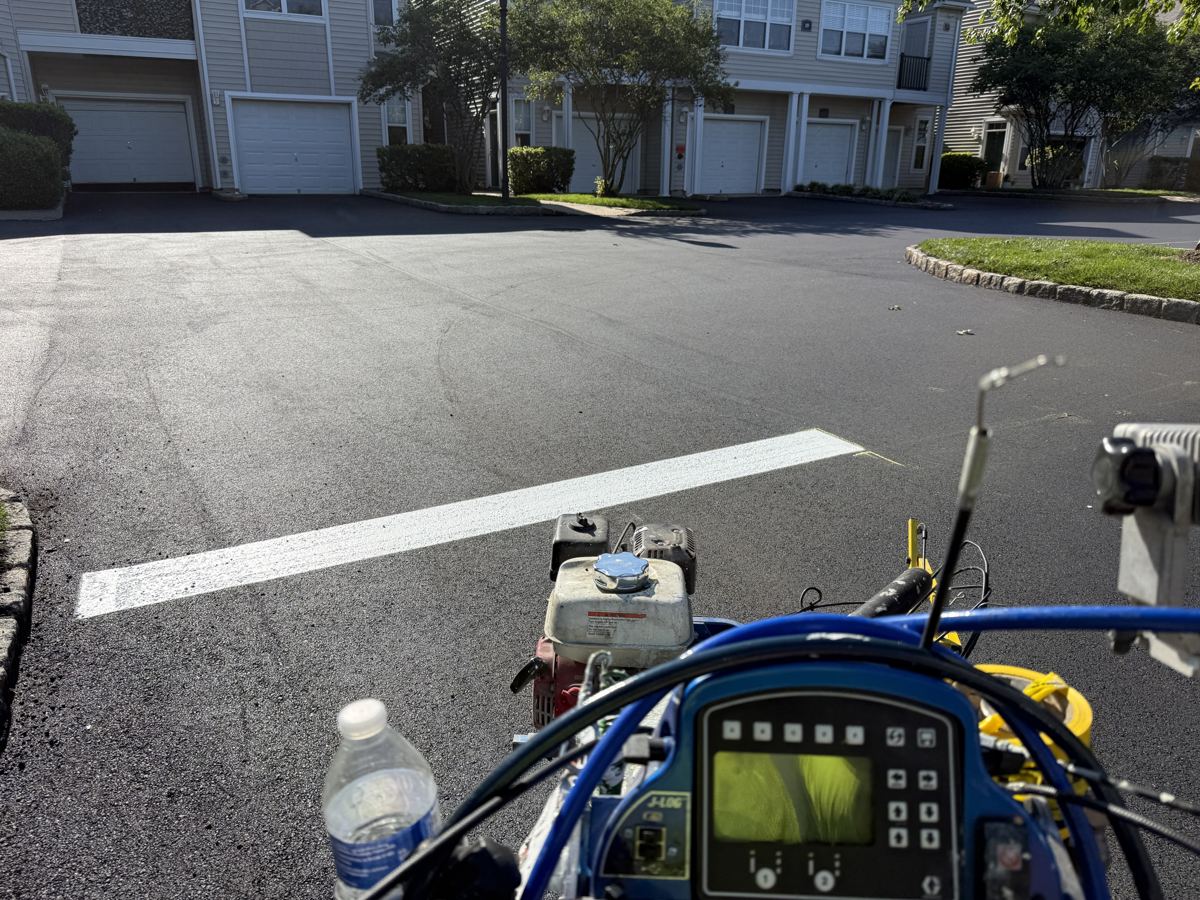
A freshly painted speed bump, with a section still to be paved beyond it, July 2026.
A new speed bump, 30 feet long, plus touch-ups on the speed bumps at the entrances.
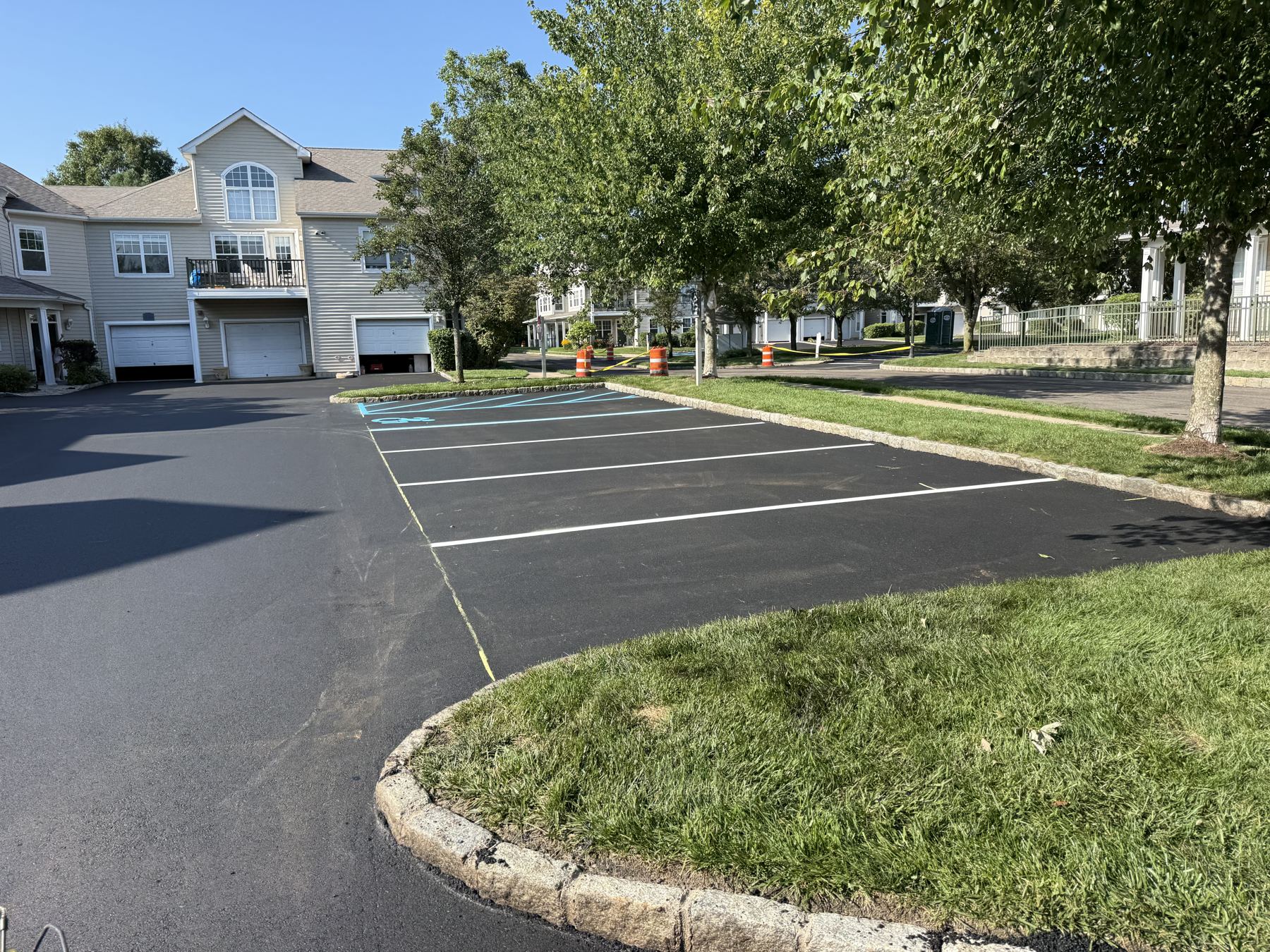
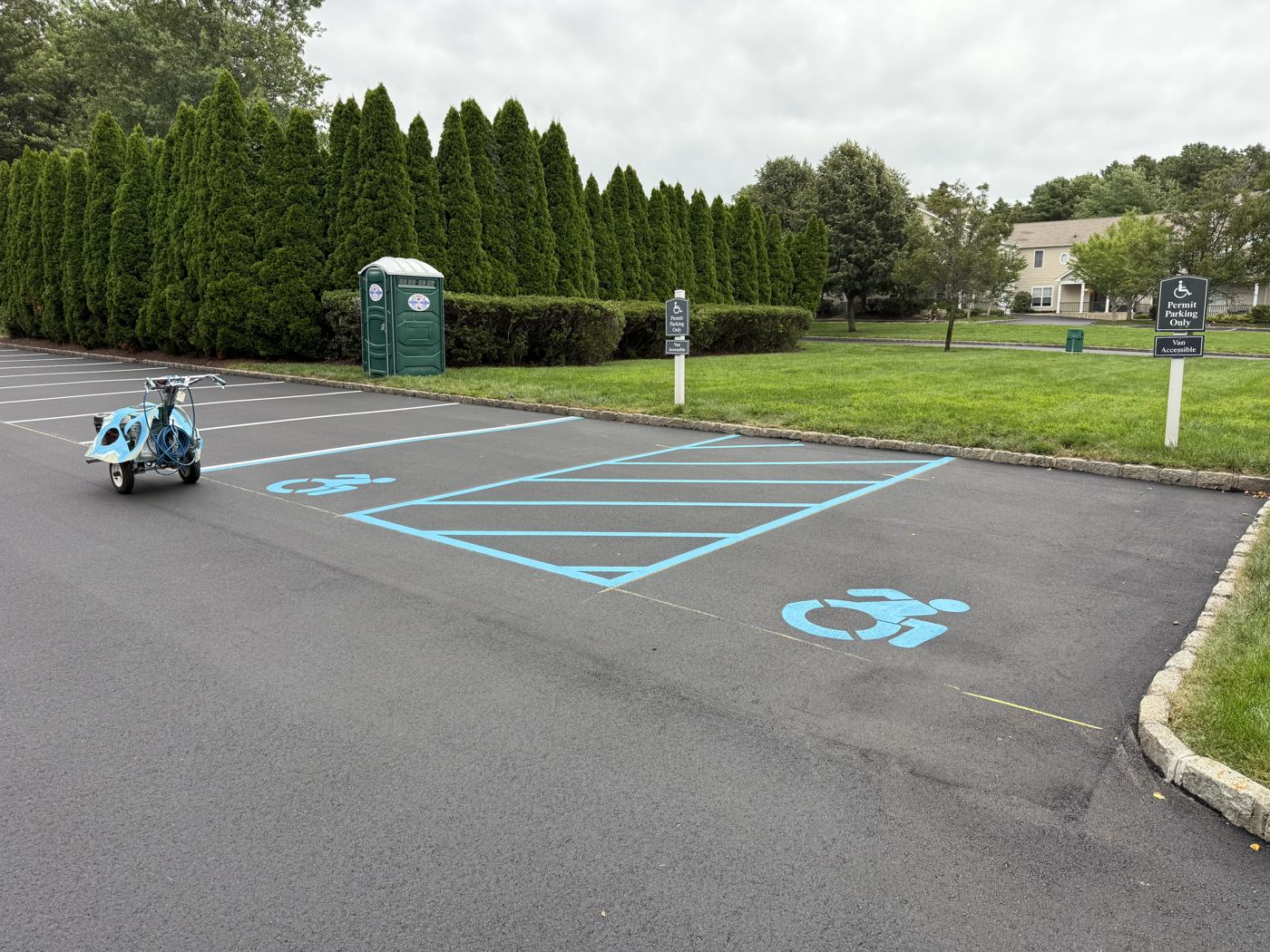
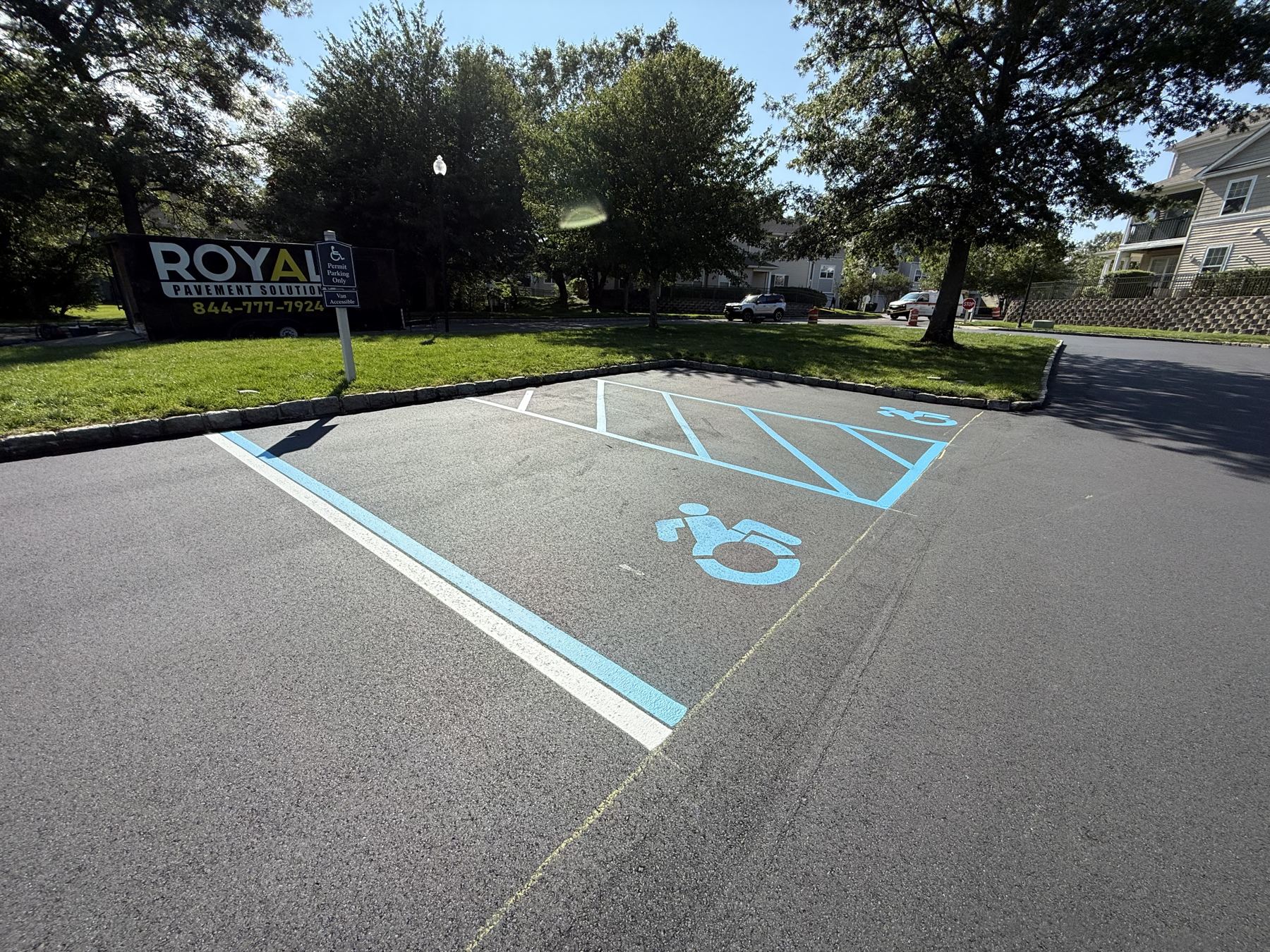
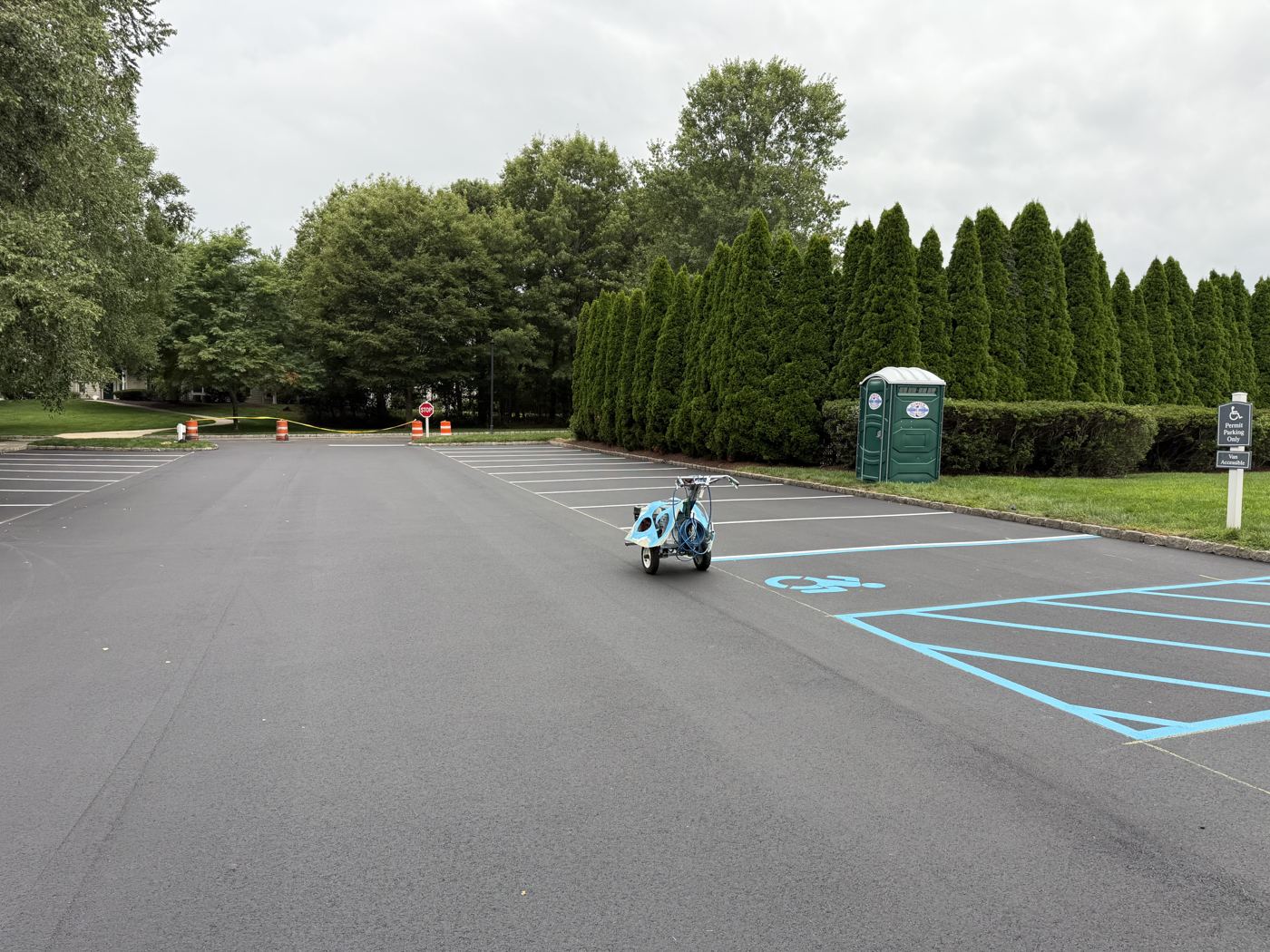
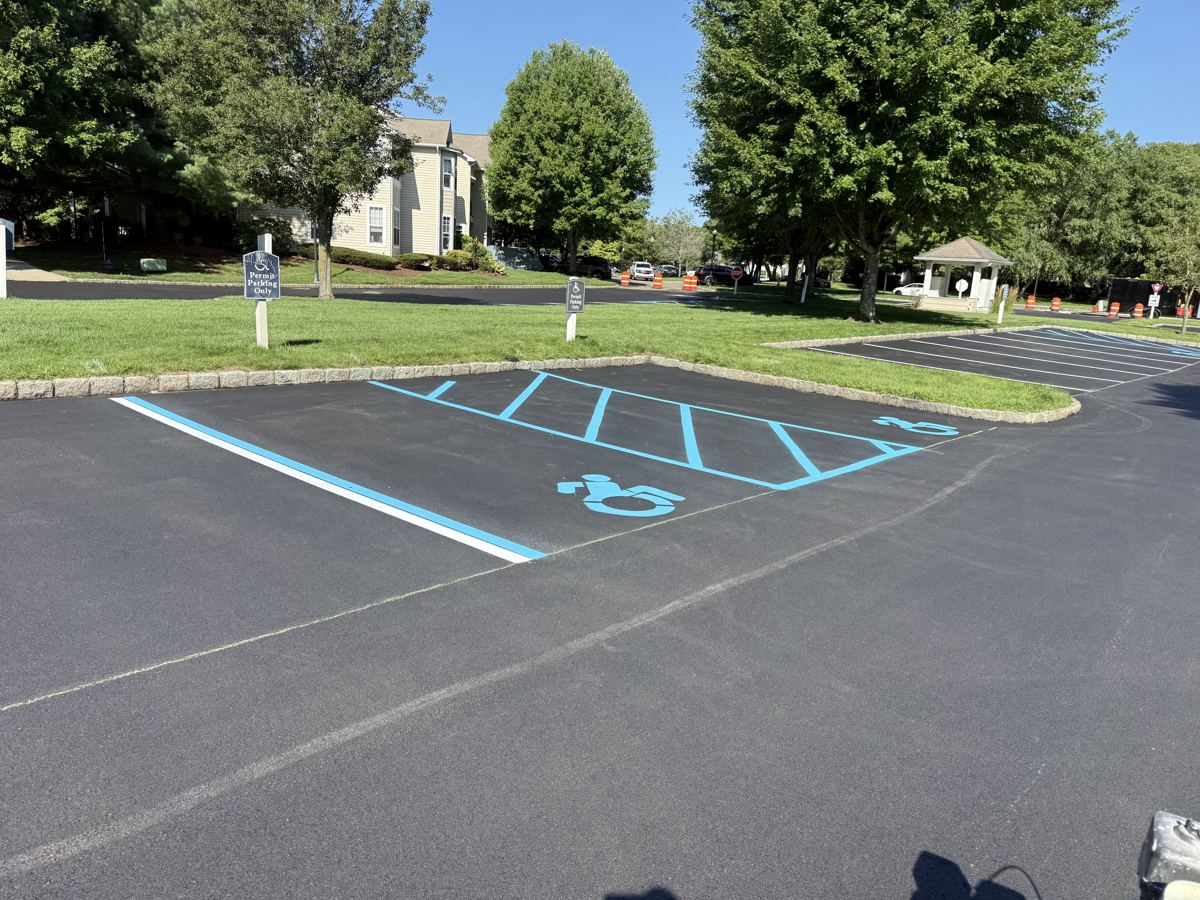
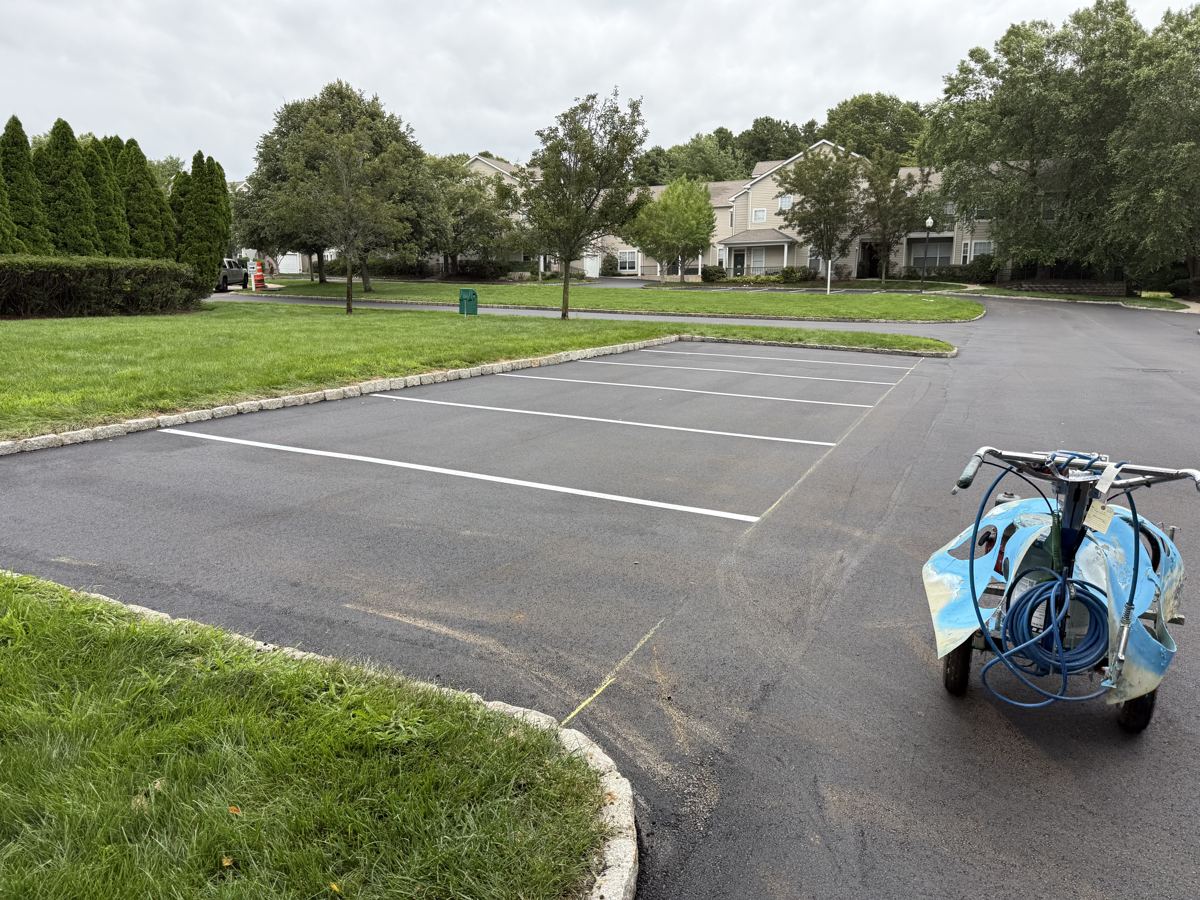
Striping an accessible parking space, July 2026.
New striping to match the old layout.
A full-time Royal paving superintendent on site.
Rollers on a newly paved lot, July 2026.A freshly painted speed bump, with a section still to be paved beyond it, July 2026.Striping an accessible parking space, July 2026.
During the job, crews found a sinkhole. It was repaired while they were on site, and the paving kept going. Asked how it was handled, Jacquie said, “It was good. We [weren’t] going to pause the entire project to fix something that obviously needs to be done one way or the other.”
New striping at an accessible parking area, July 2026.
The hardest part: people’s homes
RPS held its own pre-construction meeting with Don, Jacquie and their staff to walk through the plan. For Jacquie, the hardest part wasn’t the actual work itself, it was balancing everything and everyone else on her end. “It’s not so much managing vendors or contractors in that situation.” What takes the most work, she said, is, “Managing the residents, their expectations, and communicating with them.”
For instance, some residents lost the parking outside their apartments while their section was being repaved. Jacquie was direct with them about it.
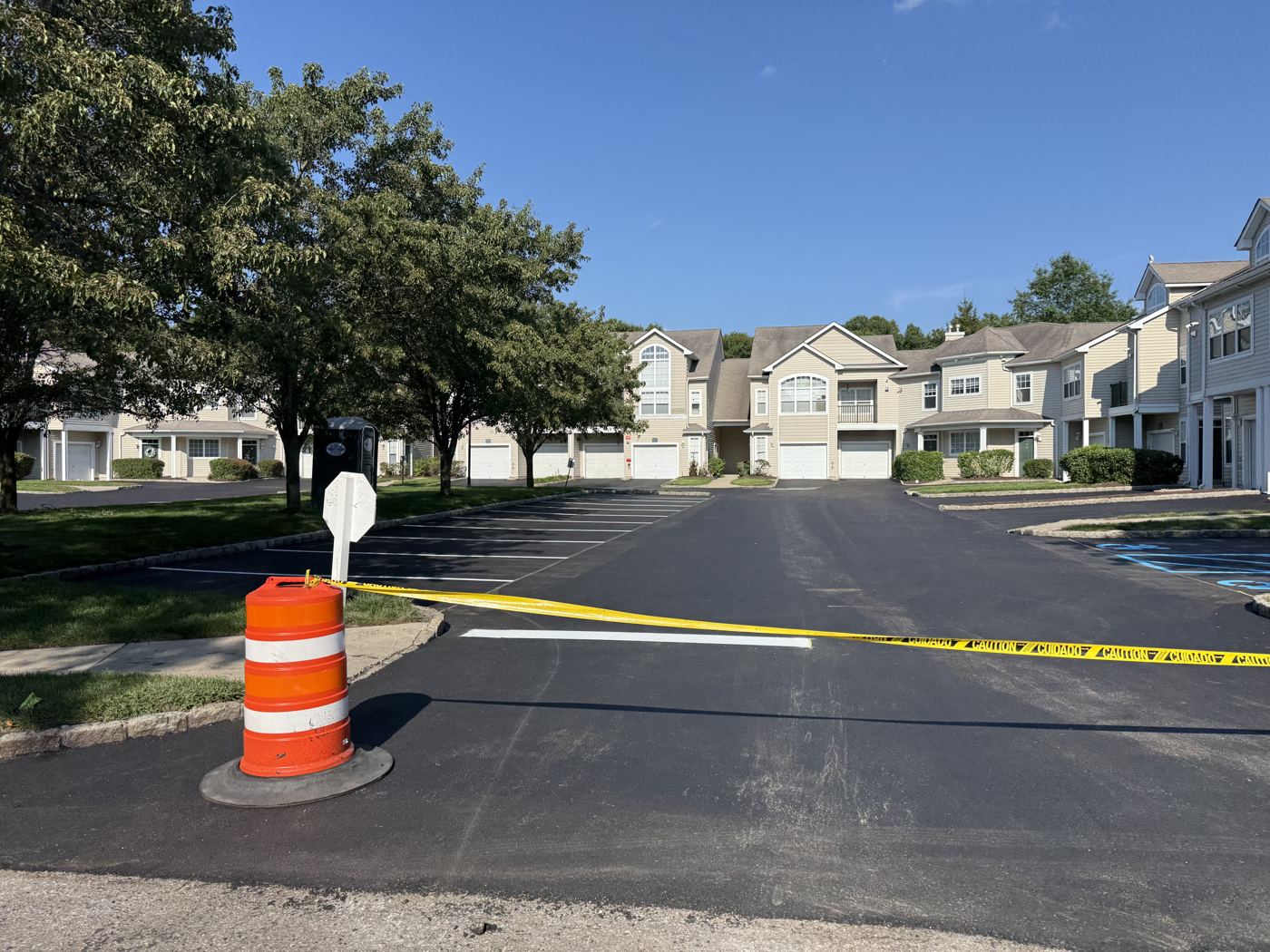
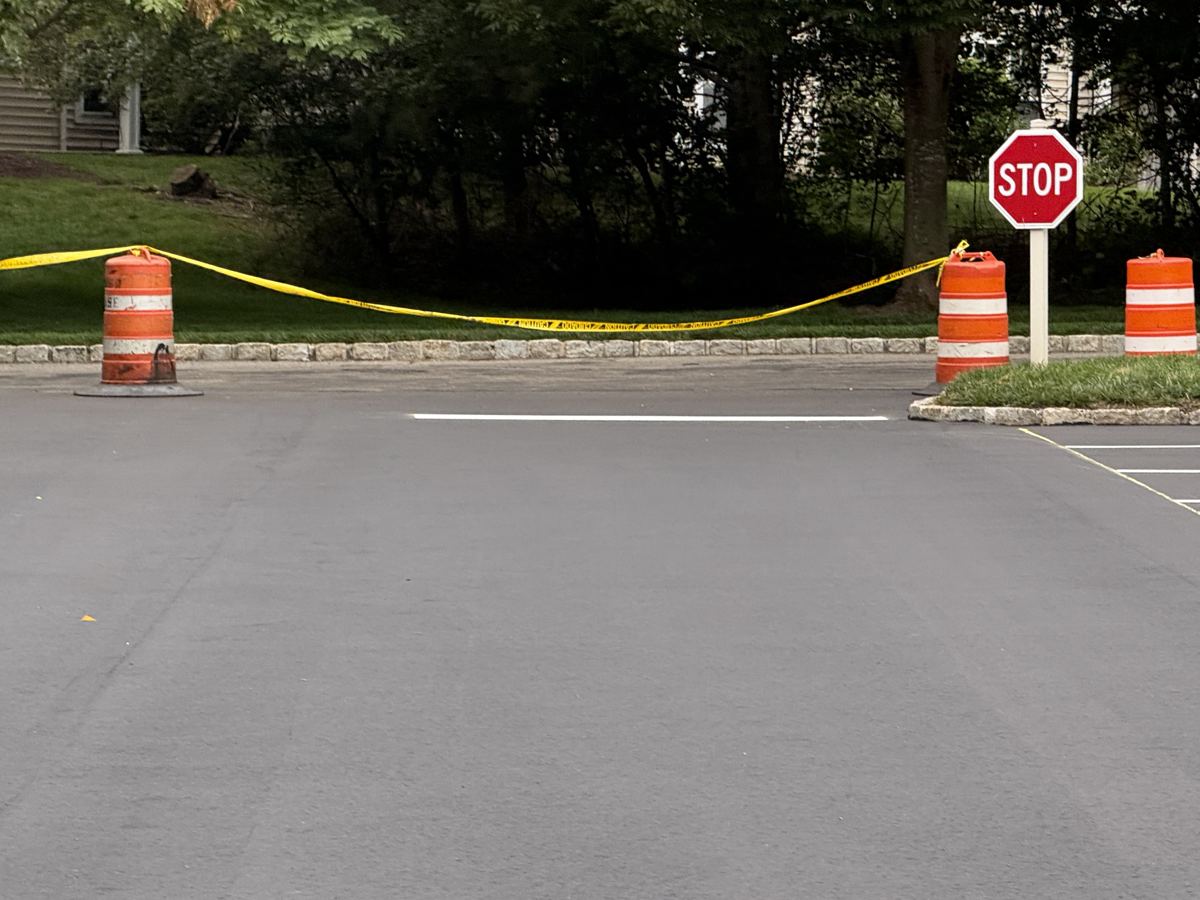
A section closed off during the work, July 2026.
“I know it’s really inconvenient to not be able to park outside their apartment for a few days, but let’s get real. They’d seen the condition of the parking lot,” She said, knowing the other side, too. “And I tell people I live in an apartment, too. I get it.”
Her office leaned toward what she first called an, “Obnoxious amount of communication.” With more than 900 residents, phone calls aren’t realistic. In her words, “It is unrealistic to try and call over 900 people.” So, the notices went out in writing, multiple times, as well as digital notices.
“It was taped to your front door at least two to three times.”
JACQUIE, ON HER NOTICE ROUTINE
THE NOTICE ROUTINE, STEP BY STEP
About 20 days out: residents were notified.
Next: an email to just the buildings whose lots were being paved, with the specifics and color coded phasing map.
The Friday before work started: a one-page printed notice, taped to every affected front door.
One or two days before each lot closed: the same buildings, again.
When rain cost a day: a revised notice from the office, with the new schedule.
Of course, no matter how many notices go up, there will always be some who, for one reason or another, don’t pay attention. They take the form of cars still on the parking lot the morning crews arrive.
Peter Pappas, Vice President
“On a job like this, it wasn’t unusual to see 90% gone when we arrived,” Peter said. “Then the remaining 10% were moving as we we’re working, and then you got those one or two cars that just never moves and the tow truck guy was on them immediately.” In this case, the community’s own tow company handled those.
A cleared lot during striping, July 2026.
WHO HANDLED WHAT IN YEAR ONE
THE PROPERTY TEAM
Approval and budget from ownership
Resident notices: the 20-day notice, the emails and the door notices, plus a revised notice after the rain day
The tow company, on call
Shutting off irrigation in the work areas, which the work order requires
Landscaping touch-ups and marking private underground lines, which weren’t part of Royal’s contract
ROYAL PAVEMENT SOLUTIONS
Budget numbers and phasing options, before and during approval
A pre-construction meeting, then a planning lunch with the site team
The color-coded phase map used in the notices
A full-time paving superintendent on site
The milling, paving, drain, speed bump and striping work
The sinkhole repair, done while crews were on site
The final walkthrough
How the three-year contract works in reality
Jacquie really liked the way this plan offered a set structure. “I think the pros is from like a budgeting standpoint, obviously, you know what you’re spending for the next three years and it makes it a lot easier.”
It also cut down on a large portion of the redundant paperwork.
“I don’t mind longer term contracts because then you don’t have to worry about drafting a new one every single year.”
She had a warning, too, for anyone signing one or interested in structuring their maintenance in this way. She said the biggest risk is forgetting about things on your end. Even with a trusted contractor, like RPS, you want to have good record keeping and, as always, keep communicating.
Her advice holds for any project with RPS, start to finish: “don’t be afraid to ask questions,” and “send the extra email.”
With Royal, she said, “We have never really had any issues with communication with Peter or anybody. He knows us as a client and what we need and what our owner wants.”
A finished year-one lot, July 2026.
Residents noticed the difference. “[Our] people were very happy once it was done,” Jacquie says, and some told her, “Oh, it’s great. I love this new pavement.”
If your community is still patching the same lots every spring, Jacquie’s first step is a good one to borrow: walk it and look. Royal’s team can walk it with you, mark what’s failing, and price it both ways, as a season of repairs or as a phased repaving plan, so you have real numbers to bring to ownership at budget time. You can reach Peter Pappas at 631-481-8326 or Info@royalpavementsolutions.com.
Peter Pappas · Vice President, Royal Pavement Solutions